

Cry Witch

The witchcraft trials scorched throughout Europe 400 years ago but I wonder if the embers still smoulder; if the vibrations in the land staked by hanging posts and pyres still reverberate today? And does the perception of witchcraft at any given time, in fact, hold up a mirror to the world and its collective state of mind? – And like in any good fairy tale does this mirror tell an uncomfortable truth? And what do we see reflected back at us during different times in our life? Perhaps altered versions of a simmered down witch, witch-finder, something between the two, or even a member of the baying crowd? In a way, I have been them all.
This essay won’t be making a comparison between the tragedy and trauma of the persecution of many innocent women 400 years ago and the occurrences which happen to people today (or more specifically me in the 1990s.)What it will do, is explore the branches that run from this tree i.e. the messaging and judgement women (and anyone whatever gender) can receive when they don’t want or feel able to conform and how this has changed in recent decades.
As it goes, I’m an old soul, I’ve traversed two centuries; I thrived using today’s relics: landline phones, telephone cards, pored excitedly over photos requiring the alchemy of dark rooms to form. I lived my first fifteen years without the internet; newspapers and TV presented me with narratives; there wasn’t a wild garden of voices like now and I grew up seeing women in the public eye paraded – celebrated – definitely objectified and hunted and ‘papped’– but now I feel the plates are sliding, ley lines are coming good, moon phases noted and on calendars in kitchens; alternative living is living, manifesting is big business and to declare yourself a witch is a lifestyle choice– which poses a question: are we finally pointing the finger at ourselves crying ‘witch’ but with absolute relief and glee?
A witch is hard to define, and I’m not sure it’s my place to do it; it’s a broad and diverse plain, but if we look at a more general definition, I guess, it’s about realising your power, understanding the natural world, harnessing it and taking action for good using magick (absolutely with a K) . I’m boiling it down to its basic bones here, and I apologise for clumsily trying to define. One thing is for sure: anyone knowing and understanding their power is always going to be a problem for those above and those at the side – (often grouped together in a fearful huddle.) That’s always going to sprout a hedge of pointed fingers. And women accused in the past were not witches, most were powerless and vulnerable to grudges held in their communities as well as a new religion trying to take root. And, if you did know your power, it was quickly extinguished … and if you lived and thought differently to the huddle at the side, well, that was too frightening, too powerful – and arguably still is.
Kate Bush’s ‘Waking the Witch’ from her 1985 album Hounds of Love is something I used to listen to with a surge of unease – yet it’s probably my favourite track. When I was younger, I never really knew what it was all about – I knew it was scary: the demonic male creature, who speaks throughout, formless with a terrifying growl– something that you could only imagine living under your bed when your night time anxiety is peak. It’s the stuff of bad dreams, a song with jagged angles and uncomfortable sounds; so, it’s hard to explain why I loved it (and still do) – perhaps I just responded to it. Years later I watched the video for the first time, that monstrous male voice growls, ‘You won’t burn! You won’t bleed! Confess to me girl!’ alongside seventeenth-century etchings of women on trial and burning at the stake. The song charts an inquisition and trial concluding with Kate Bush’s final slow walk into a body of water amid a distant authoritative voice from a rescue helicopter imploring her to ‘get out of the water’. It’s a confusing jangle of all the centuries. As is the perception of witchcraft, I suppose.

The topsoil of the song is clearly about the persecution of women in the name of witchcraft; the title a reference to a common type of torture used – where the accused were kept awake for hours so they would confess to all sorts. And as with any KB track there are layers and layers of earth to dig through gritty in its meaning. I suppose it’s about an awakening within you; an epiphany on your own terms. When Kate bursts into the bridge of the song, breaking the dam of the tired, authoritative voices telling her to ‘wake up’ she does – but not how they expect or want; instead her ‘waking’ is gleeful, fast and terrible all at the same time: part power cackle around a fire, part breath being knocked out of her as if hauled over something abrasive: fast forward rewind fast forward rewind. It’s both inhibited and expansive. You’re not sure if it’s celebratory or violent. And just like any of her songs it reaches into the crevices and pores deep in the pockets of you: you implicitly get it, you understand but unable to convey why. The power of song, perhaps. And perhaps it pinpoints the conflict in wanting the freedom to be yourself but having to deal with the consequences, the aftermath when you do – being free comes with a price, you have to sacrifice something. To dare to defy, challenge systems and admit you are openly different, be who you really want to be, live a big life, is a brave thing to do in any age and place: yes, this is wrong, it has to change; this is me, this is what I want to do; yes, I am a witch yes – so what? So burn me, then. And they do. Of course, in the past many women (and men) confessed after hours of torture worn down to the bone – yes, yes I am a witch, yes I sup at the devil’s nipple, yes, yes, please stop now. One poor woman, after enduring days and nights and days of gruelling interrogation and torture through sleep deprivation (waking the witch) in seventeenth-century Scotland (during the Bloody Mackenzie trials – and mentioned in the excellent How to Kill a Witch by Claire Mitchell and Zoe Venditozzi) she hauntingly asks – ‘can you be a witch, and not know it?’ It’s a question (and cry) that somehow reaches you through the centuries. So human, pained, desperate and full of doubt – her identity absolutely battered.

Of course those accused of witchcraft weren’t commonly burned at the stake. The myth is that it was only Scottish ‘witches’ who were burnt alive. In fact, they were strangled, garrotted first; their remains burnt. The ultimate insult, the taking away of a medieval human right: the denial of a burial in consecrated ground. The remains of such women were a problem (85% of the accused in Scotland were women) – and a deviant burial was sometimes conducted; the a fear of them becoming revenants being a driver – and they could be buried faced down, or with a heavy stone placed over the grave, or even buried in liminal spaces such as crossroads or thresholds or between low and high tidemarks on the shore (such was the infamous case of a recently discovered grave of Lilias Adie in Torryburn,Scotland ) – this was so they could not return – the devil unable to reanimate their body.
So with all this being said, I would like to mark and pay respect to some fascinating and brave women from this part of the past : one of them knew their power, their worth and lived a life beyond the accepted means – and took up space. One other (like most of these women) had no power and was vulnerable because she lived outside accepted means – and took up very little space. Both were notably burnt at the stake – rare, but it happened to them – one bookends the start of the militant witch trials in Scotland and the other is the last execution under the Witchcraft Act in Scotland.
Euphame MacCalzean was burned at the stake in 1591 following the infamous North Berwick ‘witch’ trials. Born in 1558 to the powerful Edinburgh judge Thomas MacCalzean –his only child and heir – she enjoyed an upbringing of privilege and education. She married Patrick Moscrop and in a rather unusual move for the time (although have since read it wasn’t that unusual), he took her name to preserve the good family name of MacCalzean. She was a strong woman who wasn’t afraid to voice her opinion, deemed by others as controlling – there were whispers, of course, that she had bewitched her husband. In 1586 the local council decided to place plague victims on her land without permission – and understandably, she had something to say about it; she (and Patrick) kicked up a storm of sorts and the Privy Council took her side and she went on to win the dispute. Yet in 1590 she became embroiled in another storm, this time to do with a real metrological one – a tempest playing merry havoc with the journey of King James VI bride-to-be’s journey, Princess Anne, where she was travelling from her native Denmark to Scotland to wed the king. She travelled on a fleet of twelve ships, and it took three attempts – with ships nearly wrecked each time. In the final attempt, eight Danish sailors were killed by a canon which had come loose from its fastenings – with reports that the canon was headed for Anne. A bewitched canon would soon turn Euphame and the seventy other women, who would go on to be accused, into fodder. On this third venture to Scotland, it was no good, they had to abandon all hopes of a safe sail and took refuge in Norway. King James in a suave move decided he would rescue his bride-to-be and took the journey himself where he experienced bad weather, high seas in the predictably unpredictable North Sea. This was too strange he felt; something was amiss. Meanwhile, the treasurer of the ships was annoyed with the admiral about the state of ships he returned them in. The admiral– Peder Mulk – took great umbrage, argued that it couldn’t be anything to do with him or his navigation, that the winds were strangely baleful on each attempt – and actually it was, he argued, very likely to do with witchcraft from a shoreline somewhere near; he wouldn’t be surprised, as there was a recent trial for witchcraft in Denmark, it’s clearly rife – and he surmised that witches must have urged tiny demons to clamber in to the barrels in the underbelly of the ship. Somehow, all the way in East Lothian – where the King’s residence was – Euphame was at the very heart of it all; clearly on a high from fighting civil servants, she was busy stirring up the North Sea via a cauldron with a coven in a beach hut in Auld Kirk Green at Halloween. This was the case put against her, after she was dragged into this sorry tale from the forced testimony of Geillis Duncan a servant of David Seaton. Seaton thought Geillis was up to no good and under pain of his torture she admitted to sneaking out at night healing locals. Under such torture she made a confession – remember this confession was likely the result of sleep deprivation and definitely pilliwinks (a device used to crush toes and certainly your spirit). In her confession, she implicated many others including Euphame – ‘confessing’ that Euphame had helped her kill her godfather. Charges against Euphame included using her skills to relieve women of pain during childbirth (when God-ordained women should feel the pain – thank you very much), trying to kill her uncle and nephew over a land dispute and of course, the big one: attempting to kill the King on a ship with his new wife. She wasn’t ever going to get away with that one. King James wanted to make a real example of her because of her class and rank.
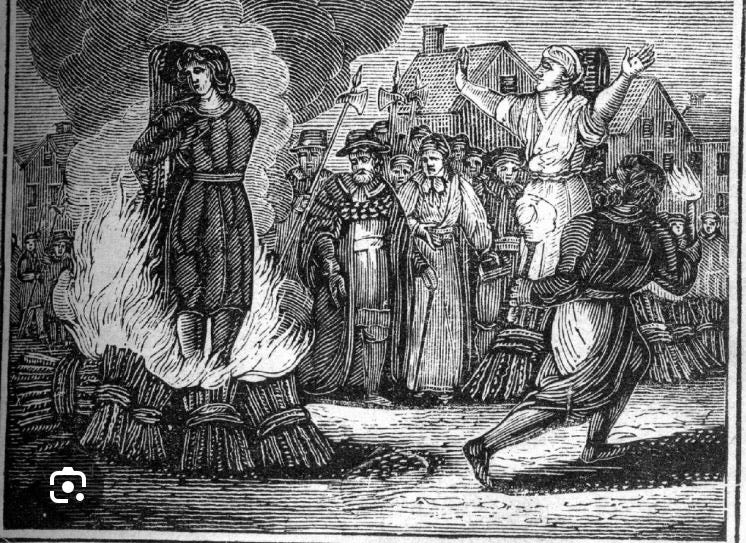
What’s fascinating about the North Berwick trials is that the complainant was none other than King James VI himself – and not only was he the complainant but he also took a chief role in the interrogations – they had not a ghost, a scant, of a chance.
At the helm of all of this was apparently Agnes Sampson otherwise known as the Wise Woman of Keith – a respected healer in the community. The trial took a surprising turn when she purported to know what exactly happened between the King and Anne of Denmark on their wedding night. This bold statement from a little old lady unnerved the King to say the least. Outraged that a poor old woman with nothing but the clothes on her back should make such a ribald statement in front of him, he decided he wanted to question her alone, face to face, and ask her what she knew. Oh to be a proverbial fly on the wall, what a scene in a film this would make. The atmosphere. The tension. A small elderly woman knowing her power, unafraid, facing the clearly shaken rasping young King – I hope she enjoyed her moment. Clearly, she enjoyed it too well, the king happy with the outcome of the conversation, affirmed it had clinched the verdict he already had in his mind: Agnes was a witch – and she was sentenced, strangled and burned. Yet it’s hard to know how true the facts are, as details of the trial were outlined in the dubious pamphlet Newes of Scotland, fat with propaganda and written by James Carmichael who followed the trial closely and recorded all the exchanges in court – a King James fan, he went on to advise the King on the writing of Demonology. So it’s hard to know how much we can believe.
What is clearly recorded is that on the 25th, June 1591 – Euphame was allotted her fate – the king making an example of her, ordered her to be burned alive at the bottom south slope of Edinburgh Castle. Her land dissolved and divided up to the King’s favourites. Materials for the fire bought and readied by, of all people, the town council. The irony slopped on to this pyre is notable.
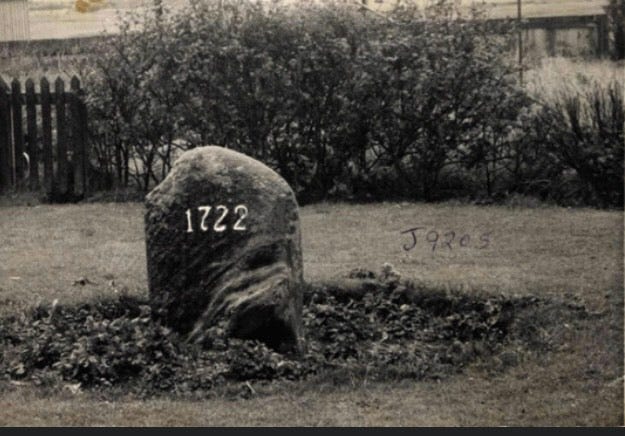
Janet or Jenny Horne was burnt at the stake in 1727 – the last recorded execution of a ‘witch’ in Scotland; her story would pull at any scrap of a heart string – unbearable to read but common. Like many of these accounts, it’s watered down or stirred up and lost in the mist of hearsay. ‘Jenny Horne’ was known to be an old phrase for a witch in the north part of Scotland, so her real identity is likely lost, an ink smudge on a lost document somewhere; yet carved in stone with sombre permanency on her execution spot is the wrong year 1722. What we do know is that Janet worked for a wealthy family as a maid across Europe before settling in Dornoch, Sutherland in Scotland – where she married and had a daughter. Her daughter was born with a deformity in her hands and feet; over the years, locals would gossip and wage that this wasn’t a deformity but instead hooves wrought and formed over time from being transformed into a pony by Janet so she could ride her to meet the devil in the dead of night. As the years flew by, Janet began to show signs of what we now would recognise as dementia – and as her behaviour became more unusual and confused the rumours began to circulate and fly. Mother and daughter were summoned to the Tollbooth in Durnoch, blamed for the recent crop failures and spate of animal deaths. Janet was interrogated about her nightly meeting with the devil with her pony-hybrid daughter – and in her confused state, she readily admitted to the story. To prove her innocence she was asked to recite the Lord’s Prayer; understandably she was unable to remember the words – and as she faltered, she was condemned – a thicket of fingers pointing, her fate sealed: witch, to be burned at the stake … her daughter too.
Janet’s daughter managed to escape in the night but in the morning Janet was led to her death in a slow show of ridicule: stripped, tarred, paraded through the streets in the barrel she would be burned in. Old lore reports that she warmed her hands cooing what a ‘fine braw’ the fire was – not understanding it was the pyre built to consume her. It’s a heart-breaking flourish to an already tragic story but probably untrue – the fire would not be lit before she was tied to the stake. However, it does underline how vulnerable Janet was – and it reveals a truth again: for no matter what time period, when things go awry, when power is there to be consumed, it’s often the vulnerable who are blamed, manipulated and persecuted. And while the witch hunts have long since ceased in the western world other parts of the world are still witness to such persecutions.
It appeared again though, the Witchcraft Act– as if by magic – during the Second World war; another Scottish woman, psychic medium Helen Duncan – with her supposed powers of knowing top secret naval information revealed during trance sessions – she was cried for a witch to very much quickly shut her up. It was big news. Big gossip. The return of the Witchcraft Act, 1735 – in actual fact, she was charged under Section 4 of the act – which outlines fraudulent spiritualist activity; so, she wasn’t so much tried for a witch – but as a fraud. In November 1941 during a séance in Portsmouth she manifested the spirit of a sailor from the bottom of the ocean, revealing to all, that HMS Barham had been sunk. At this point in time, no one but close relatives had been informed about the sinking of HMS Barham – and it wasn’t until January 1942 that news of the ship was officially announced. If careless talk cost lives, a medium in a port city manifesting exact coordinates on sea beds was costly on a catastrophic scale. The problem with Helen’s story is that you’re on a rollercoaster of belief and cynicism. On one hand, the HMS Barham reveal is sensational, remarkable; on the other turn of the mirror, was she just good at picking up gossip on the streets of Portsmouth and utilising it? – And is that why she moved there? Glance in the mirror again and we see incredible feats of spirit manifestations and ectoplasm and then again reports of where ectoplasm was clearly faked and her manifestations appallingly inaccurate. But then these are first-hand accounts so it’s hard to know what to believe. Her cry when convicted, ‘I have done nothing wrong; is there no God?’ a haunting refrain similar to ‘would I know if I was a witch?’ A woman with an incredible ability perhaps – but living in a nervy time.
For further information about the accused women during the witch trials – specifically Scotland - The Survey of Scottish Witchcraft is an incredible database with the aim of preserving their stories. The Witches of Scotland is a campaign that aims to bring justice to those convicted, accused and executed as witches under the Witchcraft Act of 1563 – and their podcast is a credible and moving resource in hearing their stories – and I heartily recommend it.
It was round about the Hounds of Love time that I was indulging in a bit of besmirching myself, accusing someone of being a witch – kind of unwittingly, kind of not. I was a quiet girl – small with a big imagination – prone to talking to myself in gardens and creating complex courts with my dolls. I scribbled down stories a lot with crayons on scrap paper and even then I had a fascination with witches. I didn’t have many friends at that age, preferring to sit in the cove of the cloakroom and watch helicopter pods spin in the air. At this time, someone had found me out in my cove, started calling me names, laughing at me, running away with my red beret (I didn’t make life easy for myself). I will give her an alias (although I can very much remember her name) let’s say Michelle Finnegan (totally made up). One day, we had to, I think, create a character. Fed up, all of a sudden I felt inspired and drew a green witch on a broomstick; I described her evil wrong-doings with great relish and I gave it a title, too: Witch Finnegan. I handed it into the teacher and I’m not sure what I expected but I didn’t expect a mighty guffaw and a glittery star. She thought it was brilliant. We had a parents’ evening showcasing our work, she pinned it on the wall and showed my parents. In the midst of all this I couldn’t quite understand the teacher’s reaction – but I definitely felt it was wrong and was a bit shame-faced. My parents read my work and loved it – but they had no idea who it was based on. I actually felt awful – I’ve no recollection of the girl noticing or realising – I’m pretty sure she didn’t – instead it was like a private joke and understanding between me and the teacher – and I wasn’t entirely comfortable with it. I wasn’t too far off King James’ crony, Carmichael, writing pamphlets sensationalising someone’s wrong-doing, crying them for a witch for all to see. Still, she did steal my red beret.
A year later or so, I began to make more friends – a different teacher, cheerier this time – instead of maths, he had a guitar and we would sing Beatles’ songs. There was a girl who told everyone she was a witch. She would place ink cartridges in her mouth, bite them and say it was the black magic frothing from her mouth. We slightly imagined rabies. We were under her spell. Like any good seventeenth-century woman I really believed. A rumour started that the big oak tree on the far field behind the playground was actually a bloodsucker tree – it was where the girl went to at night. Grassy mounds around it was simply evidence that she sacrificed the people and buried them there. It’s true – spread the rumour and hope to die. The rumour spread. And it really did. One day I came out to the playground to find the girl in the middle of a circle with the whole school chanting, ‘Witch! Witch!’ It was the stuff of nightmares, again. The Kate Bush video. Remarkably, the girl wasn’t cowering or looking uncomfortable but kind of drawing from the energy like she was at Stonehenge, standing with her hand out in defiance, putting a spell on everyone, really working it. At the back of my mind, I admired her for it, but it was a hell of a spectacle – part of me still wonders if the ink was magick. And as far as I could see, there was a truth here: every kid was just mightily relieved it wasn’t them in the centre of the circle being pointed at.
After lunch, Sir got out the guitar – but it was interrupted, a girl was sent in with a list of names to see the deputy Mrs D – and I was on it. We all went where a makeshift courtroom had been set up with the rest of her class (mostly boys – because the girls were all on trial). Mrs D was especially annoyed she said, because this furore had interrupted her reading of Mallory Towers to the class – the boys getting their figurative popcorn ready looked mightily happy about the change of plans – their grins sharpening for the spectacle ahead. We were questioned one by one, Mrs D making a great Hopkins herself – each of us quite rightly given the bollocking of a lifetime. And this I will never understand – the one who got the biggest of all – was the girl. For pretending to be a witch and encouraging the rumours. Section 4 of the Witchcraft Act. Although partly true; I think it was her way of dealing with not having friends, not being included – she harnessed a rumour for some sort of power. I think eight-year-old me recognised that. And admired her for it – and I felt a grave injustice had been committed (of course being a wimp I didn’t say anything – I was too busy saving my bacon). It’s something my best friend and I still talk about today – why did she get so much of the blame?
When I was a teenager, I started to get called ‘witch’ by my friends. My hair long, hung over my face; my features perhaps drawn slightly sharp and caked in teenage angst with a dash of brown lipstick … I looked ‘witchy’ – I suppose. It was only said by my friends but it hurt secretly – and I thought of a lurid Halloween witch mask my brother was so frightened of, which was kept under our stairs. Now at forty-four, I wish someone would say it to me again – it’s a compliment I think I could admire. When I was thirteen I was in a world of my own; I didn’t realise you were supposed to shave your legs. I thought I could go about in my luminous Bermuda shorts, ride my bike and just class my legs as useful things. I didn’t realise they were supposed to be objects, furniture to be admired – polished and smooth. I would realise in horror as the boys in my class began to cry insults about my legs from across the playing field. It was the era of magazines – the only source of urgent information. And it was confusing really – the message that it was ok for a girl to be a ‘lad’ as long as your legs and everything else were hairless, smooth. The 90s eh. The decade was near its end with the death of Princess Diana. Hunted to the end. In some ways, it wasn’t a pretty decade.
Now, of course I’m in my forties and couldn’t give a damn about my legs being smooth or hairy or anything in between. And of course, I’m not making a serious comparison between shaving my legs and my quiet experiences at school to the horrific mass persecution of people under the charge of witchcraft – or making light of it. But I’m curious; I wonder if it reverberates underneath our feet still, set in the jelly mould of our DNA – from the language and throw away comments we use, our actions at school, in any group, in reactions to anyone slightly off beat, walking to their own rhythm. If we all have had witch-finder moments in our life, steering clear of anyone different, pointing it or at least bearing witness to it. And if many of us have felt the pointed arrow of others’ fingers as they gesture at our uniqueness and flaws – whether it’s across a full classroom or being ignored in a group chat. Rivulets exist still, macro and micro, and persecution under the name of witchcraft still persists worldwide; it’s important to watch it, call out persecution like others used to cry ‘witch’, make sure it never turns into a torrent in communities – online and in the real. In whatever guise.
And look, I’m not saying anything new here but I just look behind me up the river of the past and I can feel my sail quiver a bit as I wonder if I had ancestors who were hounded and prodded and paraded and hanged . I look to the side of me and I can see it still marked in the landscape, written in the wind about us, ready to rattle and make stormy skies still. In Florence Given’s excellent book Women Living Deliciously she makes a great point about ‘relational aggression’ the way we all can socially exclude others, especially amongst women, in underhand and subtle ways e.g. not inviting them out or into online group chats, gossiping but under the cover of concern – subtle but hurtful, enough for you to question your very being. She argues that there’s an inbuilt misogyny still, that any woman living her best life can be a threat to others (because it’s what they want to do too and it’s more about how they feel about themselves) and while back in the past fifty years women’s appearance was commonly derided, commented on and attacked, Given argues that in recent years it’s simply shapeshifted into something more political, ‘We have discovered a new , more acceptable and “feminist” way to shame women publicly now without facing any consequences, because we wrap it up in moral righteousness. We’ve just started calling each other “problematic” instead … The word claws and hooks into our good-girl training and makes us feel like the devil. It is the modern equivalent of “witch”… If you decide to defend her, or even ask, “what did she do wrong?”, you too may be considered problematic for even asking. You too may face social exclusion.’ It is a salient point well made in what is a very positive, life-affirming book encouraging women to live the life of their dreams and expand – not shrink – and wake up, dodge the patriarchy
These days, I like to think the word ‘witch’ has been reclaimed – yet its history and the hate which collected, rolled in and insidiously bundled under the word, still lurks, still haunts, shapeshifting under other names, other words.
Yet there is the patter of hope ( and I know in many places this patter is painfully not heard, and it’s going the other way – a retraction, the world closing in again) but in recent years, there has been a rise of awareness and understanding of how we function. Governments may be slow to catch up, but mainstream knowledge of neurodivergence – for example, and perimenopause and menopause is growing fast; its expansion so far-reaching that the NHS can’t keep up – which is unfortunate (I’m on a list myself) but a sign, at least, that the correct information (most the time) is out there. School and workplaces are beginning to widen the hole for all shapes of pegs (I think). And maybe it’s my algorithm but there are, it seems, some recent moves to stamp out prejudice towards older people, including the marketing that follows it like a repugnant smell; the other day I heard an infomercial appealing for everyone to be mindful of their behaviour and throw away comments etc., towards older colleagues in the workplace, anywhere, spot it, call it out, cry out for what it is: ageism. To add, it wasn’t done in a Nanny State kind of way just a little reminder that words hurt, words can damage. And so in that way – I think of Agnes. I think of Janet Horne. I think of them all. And older influencers online living how they want to, in their sixties, seventies rocking it out 1970s’ style; New York-Debbie-Harry style. It’s edifying. As a woman in her middle age that makes me feel a heck of a lot better. The path is clear. The path is fun. More voices to listen to now. Recently, I read Caitlin Moran’s book More Than a Woman – she declares she is in her ‘crone’ zone now and she couldn’t be more delighted. Gathered with her friends, her coven, in the garden, cackling and revelling in a confidence and wisdom only time can give. It’s good to be a crone, a ‘hag’ – a bit relieved to leave the ‘maiden’ years behind. Painfully aware of the responsibilities you now have every which way, it becomes good to dance around the fire, to visit ancient stones – Stonehenge (especially on a Solstice – this year’s Solstice broke records for visitors – which is interesting, demonstrative perhaps). It’s good to eradicate algorithms, get back to natural rhythms and/or get HRT that’s right for you; it’s good to get in the garden again and grow some herbs, get close to the earth, the soil. It’s good to celebrate who we are. It’s good to undo that top button of our jeans and breathe. Let go. Let ourselves go. It’s good to ditch the razors (if you want to) and get on a bike .It good to really laugh and be happy because you’re allowed to be you. It’s good to do all of those things because it might in its wake reduce the micro trials in playgrounds, workplaces, hospitals, anywhere; difference will perhaps become much the same and more narratives and voices will grow and flourish like flowers. It’s good to cry.
It’s good to really look in the mirror … and cry witch.

wonderful article